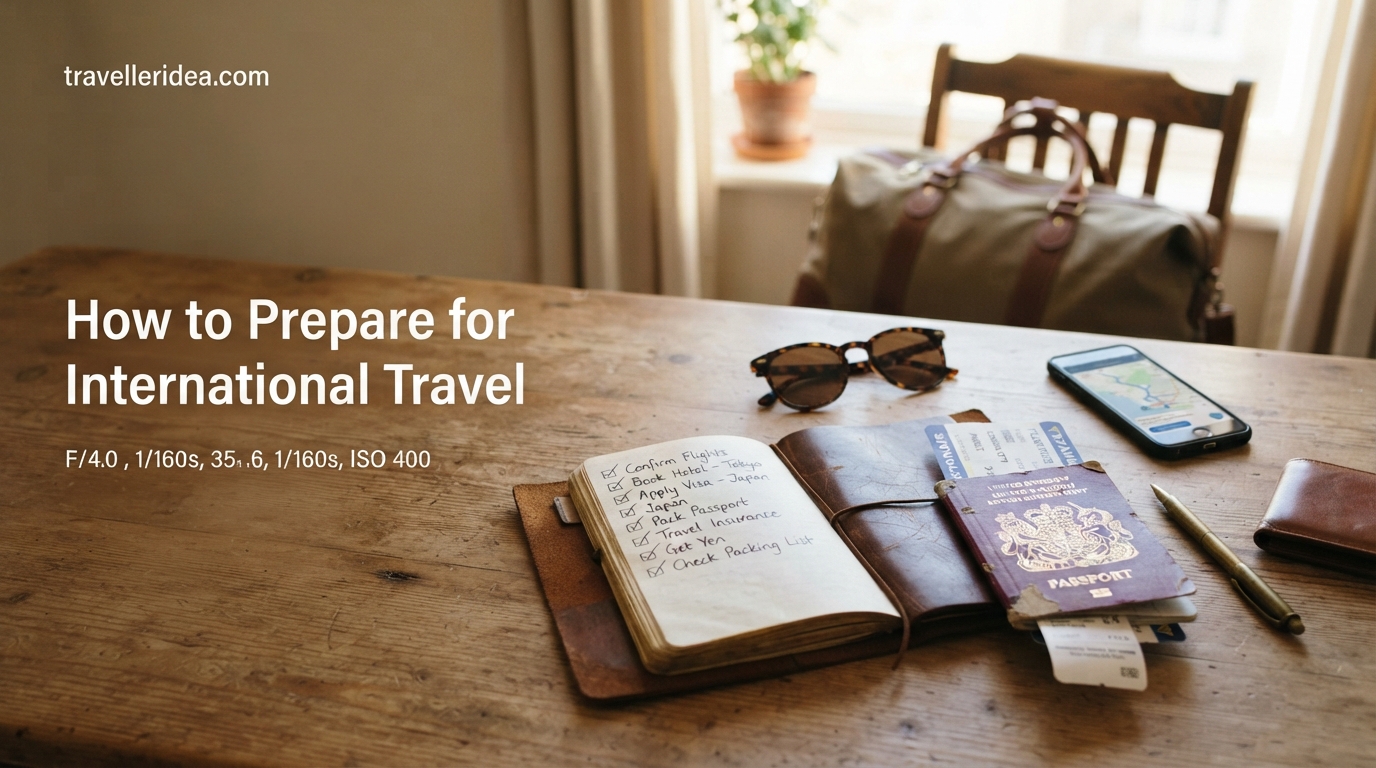
International travel is an opportunity to discover new destinations, experience different cultures, and create unforgettable memories. However, preparing for a trip abroad involves much more than booking a flight and packing a suitcase. Travelers must understand visa requirements, organize essential documents, manage their budget, follow airline regulations, and prepare for the practical challenges of visiting another country.
For first-time travelers, these responsibilities can seem complicated. A small mistake, such as carrying an expired passport, overlooking a transit visa, or packing a restricted item, can create unnecessary problems at the airport or during immigration.
The good news is that international travel becomes much easier when you prepare in the right order.
This comprehensive guide explains how to prepare for international travel step by step, from choosing your destination to arriving safely at your hotel. Whether you are traveling for a holiday, business, education, family visit, or personal adventure, these practical foreign travel tips will help you plan your journey with confidence.
Step 1: Choose Your Destination and Understand Your Travel Purpose
The first step in international travel preparation is deciding where you want to go and why you want to visit that country.
Your travel purpose influences almost every part of your journey, including your visa category, supporting documents, accommodation, budget, and planned activities.
For example, a tourist visiting Thailand may need different supporting documents from a student traveling to Malaysia or a businessperson attending a meeting in Singapore.
Before choosing your destination, consider your travel budget, available vacation time, preferred climate, language, transportation facilities, and personal interests.
Research the destination’s culture, local laws, safety conditions, and entry requirements. If you are traveling abroad for the first time, a destination with convenient public transportation, accessible accommodation, and familiar travel facilities may make your experience more comfortable.
First Time International Travel Destinations
Travelers from Bangladesh often consider destinations such as Thailand, Malaysia, Singapore, India, and the United Arab Emirates for holidays and short international trips.
However, the best destination depends on your nationality, visa eligibility, budget, and personal preferences. A country that offers convenient entry for one traveler may have different requirements for another.
Choose a destination that matches your interests and financial circumstances rather than simply following popular travel trends.
Once you have selected your destination, research the official immigration website and relevant embassy information. This will help you understand the entry requirements before spending money on your travel arrangements.
Step 2: Check Your Passport and Visa Requirements
Your passport is one of the most important documents for international travel. Before booking your journey, check its expiry date, condition, and remaining validity.
Some countries require passports to remain valid for several months beyond the planned arrival or departure date. Others have different requirements depending on nationality, visa category, or travel circumstances.
Do not assume that a passport is acceptable simply because it has not expired. Check the specific requirements of every country you plan to visit or transit through.
If your passport is damaged, nearly expired, or does not meet the required validity period, contact the relevant passport authority as early as possible.
Next, determine whether you need a visa, electronic travel authorization, or another form of entry permission.
Visa requirements can differ according to nationality, travel purpose, and length of stay. Some travelers may qualify for visa-free entry, while others must obtain approval before departure.
The International Air Transport Association’s Travel Centre provides passport, visa, and health requirement information that travelers can use when researching their journeys. Always cross-check important requirements with the destination’s official immigration authority or embassy.
What Are the Necessary Documents Needed to Travel Abroad?
The necessary documents depend on your destination and travel purpose. However, most international travelers should prepare the following:
- A valid passport that meets the destination’s validity requirements.
- A valid visa, electronic visa approval, or other required entry authorization.
- Confirmed flight information and onward or return travel details, where required.
- Hotel reservation or accommodation information.
- Evidence of sufficient financial support, if requested.
- Travel insurance documents, when required or purchased.
- Supporting documents related to your travel purpose.
- Required arrival forms, vaccination certificates, or other health documents, if applicable.
Business travelers may need invitation letters or company documents. Students may need admission letters and enrollment records. Visitors traveling to meet relatives may need an invitation letter and information about their host.
Traveling with children can require additional documentation, particularly when a child is traveling without one or both parents. Check the relevant rules before departure.
Keep your original documents secure and prepare copies of important records. Store one set separately from the originals and leave another set with a trusted person at home.
Digital copies can also be useful, but do not depend entirely on your phone or internet connection.
Step 3: Complete Your Visa Application Carefully
If your destination requires a visa, begin the application process early enough to allow for document preparation, appointments, and possible processing delays.
The visa application process differs from country to country. Some destinations accept online applications, while others require an application through an embassy, consulate, or authorized visa application center.
Before applying, confirm the correct visa category. A tourist visa, business visa, student visa, and employment visa may have different conditions and supporting document requirements.
Prepare your application form carefully. Your name, passport number, date of birth, travel dates, and other personal information should match your passport and supporting documents.
Common supporting documents may include photographs, bank statements, employment records, accommodation details, flight information, and evidence of your travel purpose.
Submit only genuine documents and accurate information. False statements or altered documents can result in refusal and may affect future visa applications.
If an interview or biometric appointment is required, follow the instructions provided by the relevant authority.
After receiving your visa, check the spelling of your name, passport number, validity dates, permitted duration of stay, and number of entries.
For electronic visas, save the approval document and carry a printed copy if appropriate.
Remember that a visa does not always guarantee entry. Immigration officers may ask questions about your travel purpose, accommodation, financial arrangements, and return plans.
Step 4: Prepare a Realistic Travel Budget
A well-planned budget helps you enjoy your trip without worrying constantly about expenses.
Begin by estimating the cost of airfare, visa fees, accommodation, meals, local transportation, sightseeing, and shopping.
Include additional expenses such as airport transfers, baggage charges, mobile internet, travel insurance, and emergency costs.
Research the local cost of living at your destination. A hotel with a low nightly rate may not be economical if it is far from public transportation or the places you plan to visit.
Set aside an emergency fund separate from your regular spending money. Unexpected expenses may arise from flight delays, medical needs, lost belongings, or changes in accommodation.
Consider carrying more than one payment method. An internationally accepted payment card and a reasonable amount of local currency can provide flexibility.
Before departure, contact your bank to check whether your card can be used abroad and whether international transaction fees apply.
Also, research the destination’s rules for bringing foreign currency into the country. Some destinations require travelers to declare cash above specified limits.
Step 5: Book Your Flights and Accommodation
Once you have confirmed your travel dates and visa requirements, arrange your flights and accommodation.
- Compare flight options based on the total cost, baggage allowance, departure time, transit duration, and airline policies.
- A cheaper ticket may not be the most convenient option if it includes a long layover, an overnight connection, or additional baggage charges.
- If your journey includes a connecting flight, check whether you need a transit visa. Transit requirements can depend on your nationality, airport, ticket arrangement, and whether you need to pass through immigration.
- Allow sufficient time for connections, especially if you must collect baggage, change terminals, or complete another security screening.
- For accommodation, consider the location, transportation access, check-in arrangements, cancellation policy, and guest reviews.
- Keep your flight confirmation and accommodation details accessible. Immigration officers may ask where you intend to stay and how long you plan to remain in the country.
If your travel dates depend on visa approval, review the cancellation and refund conditions before paying for non-refundable bookings.
Step 6: Check International Travel Restrictions
International travel restrictions can affect your ability to enter a country, carry certain belongings, or complete your journey as planned.
Before departure, check the latest information from your airline, destination immigration authority, customs department, and relevant government agencies.
Requirements may include restrictions concerning:
- Passport validity and visa conditions.
- Health declarations or vaccination certificates.
- Medicines and controlled substances.
- Food, plants, and animal products.
- Cash and valuable goods.
- Dangerous goods and prohibited baggage items.
Rules can differ between your departure country, transit country, and final destination.
For example, a medicine that is legally available in your home country may be restricted or require special authorization abroad. Some countries also have strict rules concerning food products and agricultural items.
If you are carrying prescription medication, confirm that it is permitted in every country on your itinerary. Keep it in its original labeled packaging and carry the prescription or supporting medical documents when required.
Check your airline’s baggage regulations as well. Certain items may be permitted in checked baggage but prohibited in cabin baggage, or vice versa.
The safest approach is to verify the rules before packing rather than discovering a problem at the airport.
Travel.state.gov+2
Step 7: Prepare Your Packing List for International Travel
Packing is an important part of preparing for international travel. The objective is to carry everything you need without making your luggage unnecessarily heavy.
Your packing list for international travel should depend on the destination, trip duration, weather, planned activities, and airline baggage allowance.
Start with essential clothing. Choose comfortable outfits suitable for the local climate and cultural expectations. Select items that can be combined easily to reduce the amount of luggage you need.
Include suitable footwear, personal hygiene products, and essential medication.
Keep valuable and important items in your cabin baggage whenever possible. These may include your passport, travel documents, wallet, phone, prescription medication, and a change of clothes.
Essential International Travel Packing Checklist
Travel documents: Passport, visa, flight confirmation, accommodation details, insurance information, and supporting documents.
Clothing: Shirts, trousers, underwear, socks, sleepwear, comfortable shoes, and weather-appropriate outerwear.
Personal items: Toothbrush, toothpaste, toiletries, skincare products, and personal hygiene supplies.
Electronics: Mobile phone, charging cable, suitable power adapter, headphones, and permitted power bank.
Health and safety: Prescription medication, basic first-aid supplies, and personal medical essentials.
Travel accessories: Luggage tags, a small day bag, a reusable water bottle, and a luggage lock.
Check your airline’s baggage allowance before packing. Pay attention to the permitted weight, dimensions, number of bags, and rules for special items.
Do not assume that an item allowed in checked baggage is automatically permitted in cabin baggage.
Step 8: Organize Your Travel Documents and Important Information
One of the most useful first time international travel tips is to organize your documents before the day of departure.
Create a travel folder containing your passport information, visa approval, flight details, accommodation address, insurance information, and emergency contact details.
Keep the original documents in a secure location and store copies separately.
Share your itinerary with a trusted family member or friend. Include your accommodation information and a way to contact you during the trip.
Save important documents on your phone in a secure format that you can access offline. Printed copies can be useful if your phone is lost, damaged, or out of battery.
Write down important contact numbers instead of relying only on your mobile phone.
These preparations are particularly helpful when traveling alone or visiting a destination where internet access may be limited.
Step 9: Prepare for Your Health and Personal Safety
Your health is an important part of international travel preparation.
Before departure, research the health conditions at your destination and check whether you need any vaccinations, preventive medication, or medical documentation.
For certain destinations, it may be helpful to consult a healthcare professional or travel health clinic several weeks before departure. The CDC recommends a travel health consultation approximately four to six weeks before travel when possible.
If you regularly take medication, carry enough for your trip and allow for possible travel delays. Check whether the medication is legal in your destination and any transit countries.
Travel insurance can also provide valuable protection against certain unexpected expenses, including eligible medical emergencies, trip cancellation, or lost baggage.
Read the policy carefully to understand its coverage limits, exclusions, and emergency contact procedures.
Research local emergency numbers and identify where to seek medical assistance if necessary.
If you have specific medical needs, keep relevant medical information and emergency contacts accessible during your journey.
Step 10: Learn About Local Culture and Transportation
Learning about your destination before departure can help you avoid misunderstandings and unnecessary difficulties.
Research local customs, appropriate clothing, public behavior, and common etiquette. Some countries have specific expectations concerning dress, religious sites, photography, and public conduct.
Learn a few basic phrases in the local language, such as greetings, thank you, and asking for directions.
Understand how transportation works at your destination. Research public transportation cards, airport transfers, licensed taxi services, and other reliable options.
Save the address of your accommodation and make sure you know how to reach it after landing.
If you plan to visit religious or cultural sites, check their visitor rules before arrival.
Respecting local customs and following local laws can make your experience more comfortable and help you avoid unnecessary problems.
Step 11: Prepare for Your First International Flight
If you have never traveled by air internationally, understanding airport procedures will help you feel more confident.
International flights generally involve several stages, including check-in, baggage drop, immigration, security screening, and boarding.
What to Do at the Airport
1. Arrive early. Check your airline’s recommended airport arrival time. Allow additional time for traffic, queues, and document checks.
2. Complete check-in. Present your passport and other required documents at the airline counter, unless you have already completed the necessary online check-in procedures.
3. Drop off checked baggage. Make sure your baggage is tagged for the correct destination. Keep your baggage receipt until you have collected your luggage.
4. Complete departure immigration. Follow the airport signs and present your passport and any required travel documents.
5. Pass through security screening. Follow instructions concerning electronic devices, liquids, and other belongings.
6. Find your departure gate. Check the airport information screens regularly because gates and departure times can change.
7. Board your flight. Listen for announcements and arrive at the boarding gate before boarding closes.
These tips for flying internationally for the first time can help you avoid confusion and make the airport experience easier.
Tips for Traveling Abroad First Time by Air
Wear comfortable clothing and shoes. Keep your passport, boarding pass, phone, and essential medication within easy reach.
Drink water during the flight and move your legs periodically when it is safe to do so. For long journeys, consider adjusting your sleep schedule gradually to the destination’s time zone.
Bring permitted entertainment, such as headphones, a book, or downloaded movies, to make the journey more enjoyable.
Pay attention to the cabin crew’s safety instructions and follow the airline’s rules throughout the flight.
Step 12: Understand Arrival Immigration and Customs
Your international journey does not end when the aircraft lands. You must complete the arrival procedures before leaving the airport.
After landing, follow the signs for immigration or passport control. Have your passport, visa, and required arrival documents ready.
Immigration officers may ask questions about your travel purpose, accommodation, intended length of stay, and return or onward journey.
Answer clearly and truthfully. Your answers should match the information in your visa application and supporting documents.
After immigration, collect your checked baggage and check the baggage tag if necessary.
Proceed through customs and declare any items that must be reported under local regulations.
If you are unsure whether an item needs to be declared, ask a customs officer rather than making assumptions.
Before leaving the airport, confirm your transportation arrangements. Use authorized airport transportation services or other reliable options.
Keep your accommodation address available on your phone or in printed form so you can communicate it easily if necessary.
Step 13: Prepare for Traveling Abroad Alone
Traveling alone for the first time can be a rewarding experience. It gives you the freedom to explore independently, manage your own schedule, and develop confidence.
However, solo travelers should pay particular attention to safety and communication.
Choose accommodation in a location with reliable transportation and convenient access to essential services. Read recent reviews and check the property’s security arrangements before booking.
Keep copies of your passport and travel documents in a secure location. Avoid sharing your complete itinerary or accommodation details with strangers.
When exploring, keep your phone charged and carry enough money for transportation and basic expenses.
If you plan to meet people during your trip, choose public places and use your judgment when sharing personal information.
Share your itinerary with a trusted person and arrange regular check-ins, especially if you plan to visit remote areas or participate in outdoor activities.
Traveling alone does not mean you must manage every situation without assistance. If you feel uncomfortable or need help, contact your accommodation provider, local authorities, or someone you trust.
Step 14: Prepare for Driving Abroad for the First Time
If you plan to rent a car or drive in another country, prepare carefully before your journey.
Driving regulations vary between countries. Some destinations require an International Driving Permit alongside your valid domestic driving license, while others have different recognition requirements.
Check the local driving laws, road signs, speed limits, and parking regulations before departure.
Understand whether vehicles drive on the left or right side of the road. This difference can be particularly important for travelers who are unfamiliar with the destination.
Before renting a vehicle, review the rental agreement, insurance coverage, fuel policy, and any additional driver requirements.
Make sure you understand the local rules concerning mobile phone use, seat belts, child safety seats, and drink-driving restrictions.
If you are not confident about driving in unfamiliar conditions, consider using public transportation or a licensed local driver instead.
Step 15: Prepare Your Phone, Money, and Travel Essentials
Your phone can be one of your most useful travel tools. Before departure, check whether your device supports international roaming or whether you need a local SIM card or eSIM.
Download offline maps and save important addresses. Keep digital copies of your documents in a secure location that you can access without relying entirely on mobile internet.
Install useful travel applications, such as your airline’s official app, a navigation app, and a translation tool.
Check whether your destination uses a different electrical plug or voltage system. Carry a suitable adapter and verify that your electronic devices support the local voltage.
Save important contact details, including your accommodation, airline, travel insurance provider, and emergency contacts.
Keep your phone charged and consider carrying a power bank that complies with your airline’s battery rules.
Step 16: Review Your Travel Preparation Checklist Before Departure
A final review can prevent small mistakes from becoming major travel problems.
Use this travel preparation checklist during the final days before your departure.
International travel checklist
Tick off each item as you complete your final preparations.
- Passport validity and visa requirements checked
- Flight details and accommodation confirmed
- Transit visa and entry requirements reviewed
- Travel insurance and emergency contacts prepared
- Important documents copied and stored securely
- Baggage allowance and restricted items checked
- Luggage packed and weighed
- Phone, charger, and permitted power bank ready
- Airport transportation and arrival time confirmed
- Home secured and emergency contact informed
Before leaving home, check your flight status and departure terminal. Confirm your airport transportation and make sure essential documents are not inside checked baggage.
Check that your luggage meets the airline’s weight and size restrictions. Make sure you have not packed prohibited items and that you can access your passport and other important documents easily.
Finally, secure your home. Turn off unnecessary electrical appliances, check doors and windows, and arrange for someone to look after your home if needed.
Once these details are complete, you can leave home with greater confidence and focus on enjoying your journey.
Common International Travel Mistakes to Avoid
Even experienced travelers can make mistakes when planning an international journey. First-time travelers should be especially careful about the following issues.
Waiting too long to apply for a visa: Visa processing may take longer than expected. Begin early and avoid assuming that approval will arrive by a particular date.
Ignoring passport validity: A passport that is still valid may not meet your destination’s entry requirements.
Overpacking: Carrying too much luggage can increase costs and make transportation more difficult.
Ignoring transit requirements: A connecting flight may involve additional visa or immigration requirements.
Failing to check baggage rules: Airlines may have different restrictions for cabin baggage, checked baggage, and special items.
Carrying insufficient money: Unexpected expenses can occur even when your main travel arrangements are already paid.
Relying only on digital documents: A printed copy of important documents can be useful if your phone battery runs out or internet access is unavailable.
Ignoring local laws: Rules concerning medication, photography, driving, and public behavior may differ from those in your home country.
Booking without checking cancellation conditions: Non-refundable reservations can become expensive if your visa is delayed or your travel plans change.
Frequently Asked Questions About Preparing for International Travel
1. How early should I prepare for international travel?
It is best to begin preparing several weeks or months before departure, depending on your destination and visa requirements. Start with your passport, visa, and travel budget. Complete your bookings and packing preparations as your departure date approaches.
2. What is the most important thing to prepare before traveling abroad?
Your passport and required entry authorization are among the most important things to prepare. You should also confirm your flight details, accommodation, and any supporting documents required for your journey.
3. What should I carry in my hand luggage for an international flight?
Carry your passport, visa, travel documents, wallet, phone, essential medication, and other valuable items in your hand luggage. Follow your airline’s rules for liquids, batteries, and restricted items.
4. What should first-time international travelers know?
First-time travelers should understand visa requirements, airport procedures, baggage rules, local customs, and arrival immigration procedures. They should also prepare a realistic budget and keep important travel documents accessible.
5. How can I make international travel less stressful?
Start preparing early, organize your documents, pack carefully, and allow enough time for airport procedures. Research your destination and keep your travel arrangements organized so you can manage unexpected situations more easily.
6. Is travel insurance necessary for international travel?
Travel insurance can help protect you against certain unexpected expenses, including eligible medical emergencies, trip cancellations, and baggage problems. Some destinations or visa categories require specific insurance coverage. Check the policy terms and entry requirements before purchasing a policy.
7. Can I travel internationally without a return ticket?
Some countries require evidence of onward or return travel, while others apply different rules depending on the traveler’s circumstances. Confirm the requirements of your destination and airline before departure.
8. What should I do if I lose my passport while traveling abroad?
Contact your country’s embassy or consulate as soon as possible and follow its instructions for reporting the loss and obtaining a replacement travel document. Keep copies of your passport and visa separate from the originals to help with the process.
9. What are the best tips for traveling abroad for the first time?
The most useful tips are to prepare your documents early, research your destination, understand airport procedures, pack according to airline rules, and keep emergency contacts accessible. Planning ahead allows you to focus on enjoying your trip instead of dealing with avoidable problems.
Conclusion: Prepare Well and Enjoy Your International Journey
Learning how to prepare for international travel is the foundation of a comfortable and successful journey. From choosing your destination and arranging your visa to preparing your luggage and understanding airport procedures, every step contributes to a better travel experience.
First-time travelers should focus on careful planning, accurate documentation, financial preparation, and awareness of local rules. A well-organized travel preparation checklist can help you avoid common mistakes and make your journey easier to manage.
International travel is not only about reaching a new destination. It is also about discovering new cultures, learning new things, and creating meaningful experiences.
With the right preparation, you can travel confidently, manage unexpected situations more effectively, and make the most of your time abroad.
Recent Post You May Like:
- How to Prepare for International Travel: The Complete Step-by-Step Guide
- Thailand Visa Agent in Dhaka – Why Valencia Air Travels & Tours Ltd Is a Preferred Choice for Visa Consultancy

- How to Check Thailand Visa Status Online: Complete Guide for Travelers

- Sri Lanka Visa Services: Visa Application from Bangladesh

- Visa Application for Thailand: Guide to Thailand Visa Online

- Malaysia Visa Agency : Why Choose Valencia Air Travels & Tours Ltd?

- Flight Ticket Verification: How to Check and Confirm Flight Ticket Online
- Best Duffel Bag for International Travel: Guide to Choosing, Packing, and Checking Your Bag

- How to Check ETA Status Online: Sri Lanka ETA Guide